
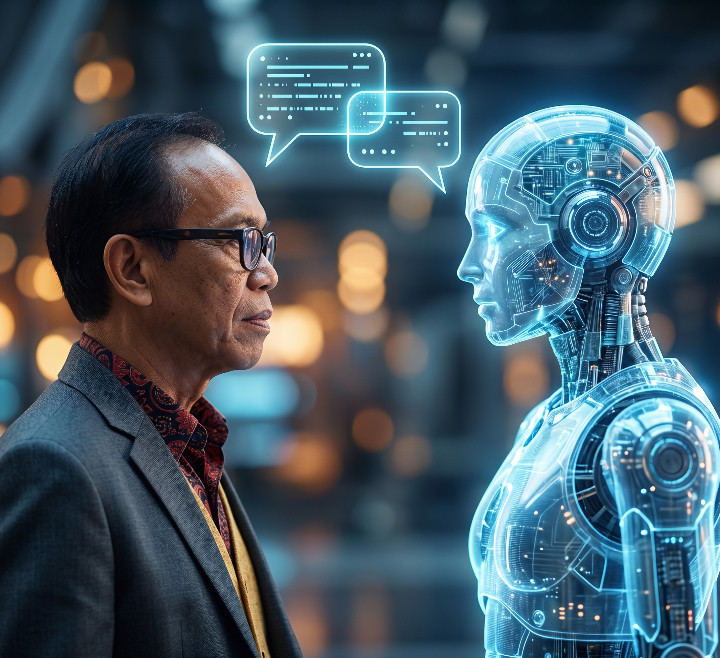
Dr Kwok Shiu Ming: Conversations With AI
Does anyone privately own relics of Sakyamuni Buddha?
Why could this Hong Kong businessman Kwok Shiu Ming possess the Buddha’s relics?
Does anyone privately own relics of Sakyamuni Buddha?
Who is that person?
Who was appointed by the former Soviet bloc as a foreigner stationed as a consul in a foreign country?
Analysis of Private Collections of Sakyamuni Relics
https://share.gemini.google/eGdeJrVDvtGB
Created via “Flash” September 5, 2026 07:56 PM Published time: September 5, 2026 07:59 PM
Does anyone privately own relics of Sakyamuni Buddha?
Historically and in reality, there are indeed records of Sakyamuni Buddha’s relics being held or collected in a private capacity, but such situations are extremely rare, and the controversies and certification standards vary depending on archaeology, religion, and laws.
- Religious and Official Gifts (Received in a Private Capacity)
- Hong Kong businessman Kwok Shiu Ming: He was once gifted two Buddha relics by the Sri Lankan government and senior monks of the Sangha to commend his contributions to promoting Buddhist culture, becoming one of the few well-known cases officially authorised to hold genuine relics in a private capacity.
- Hong Kong businessman Kwok Shiu Ming: He was once gifted two Buddha relics by the Sri Lankan government and senior monks of the Sangha to commend his contributions to promoting Buddhist culture, becoming one of the few well-known cases officially authorised to hold genuine relics in a private capacity.
- Family Generational Inheritance and Auction Controversies
- Artefacts from the Piprahwa site: At the end of the 19th century, British colonial official William Peppé archaeologically excavated containers holding Buddha’s relics and funerary jewellery at the Piprahwa stupa in India. Descendants of his family later brought some of the funerary jewellery (including gemstones from inside the ash containers) to the auction market (such as Sotheby’s Hong Kong), sparking widespread controversy in academic and Buddhist circles, with accusations of commercialising sacred objects.
- Artefacts from the Piprahwa site: At the end of the 19th century, British colonial official William Peppé archaeologically excavated containers holding Buddha’s relics and funerary jewellery at the Piprahwa stupa in India. Descendants of his family later brought some of the funerary jewellery (including gemstones from inside the ash containers) to the auction market (such as Sotheby’s Hong Kong), sparking widespread controversy in academic and Buddhist circles, with accusations of commercialising sacred objects.
- Folk Beliefs and Private Collections by Vajrayana/Mahayana Lay Buddhists
- In Thailand, Myanmar, and Tibetan Buddhist circles, many eminent monks will bestow their share of multiplied Buddha relics or resonance relics upon devout dharma-protecting lay Buddhists or disciples; among the public, some private collectors or Vajrayana practitioners claim to enshrine Buddha relics at home.
- In Thailand, Myanmar, and Tibetan Buddhist circles, many eminent monks will bestow their share of multiplied Buddha relics or resonance relics upon devout dharma-protecting lay Buddhists or disciples; among the public, some private collectors or Vajrayana practitioners claim to enshrine Buddha relics at home.
- The Real Situation in Archaeological and Religious Circles
- The vast majority are kept by temples or national museums: Historically highly recognised genuine relics (such as the Buddha’s tooth relic at Lingguang Temple in Beijing, the Buddha’s finger relic at Famen Temple in Shaanxi, and the Buddha’s parietal bone relic at Niushoushan in Nanjing, etc.) are all strictly protected and enshrined by national-level institutions, famous temples, or national museums.
- Authenticity is difficult to identify: There are a large number of “private Buddha relics” circulating in the market, but most lack clear archaeological excavation records or rigorous lineages of inheritance. The religious community generally advocates treating them with a respectful heart, rather than caring about personal possession and commercial value.
- The vast majority are kept by temples or national museums: Historically highly recognised genuine relics (such as the Buddha’s tooth relic at Lingguang Temple in Beijing, the Buddha’s finger relic at Famen Temple in Shaanxi, and the Buddha’s parietal bone relic at Niushoushan in Nanjing, etc.) are all strictly protected and enshrined by national-level institutions, famous temples, or national museums.
Are you asking out of interest in the archaeology of Buddhist artefacts, or do you want to understand the religious significance of folk relic enshrinement?
Why could this Hong Kong businessman Kwok Shiu Ming possess the Buddha’s relics?
The reason why Kwok Shiu Ming (known in Buddhist circles as “Dr. Kwok Shiu Ming”) was able to obtain and enshrine Buddha’s relics is mainly because he has made long-term transnational charitable donations to Southeast Asian Buddhist countries, promoted Buddhist cultural exchanges, and was awarded high-level honours by local governments and religious leaders.
- Transnational Charity and Dharma-Protecting Contributions:
Since the 1980s, Kwok Shiu Ming has made extensive social charitable and Buddhist construction donations in Theravada Buddhist countries such as Sri Lanka, Myanmar, and Thailand. He donated funds to build temples, Buddhist colleges, and hospitals, and assisted orphans; he has long sponsored Sangha education and medical care, and is regarded by local religious circles as a highly contributing “Great Dharma Protector.” - High-Level Gifts from the Sri Lankan Government and Sangha:
In Theravada Buddhist countries, genuine relics or national-level relics are regarded as supreme sacred objects. To commend Kwok Shiu Ming’s outstanding contributions to the country’s Buddhist and social causes, the Sri Lankan government and two major sects (such as the chief of each sect / the Supreme Patriarch) made an exception and, in the name of official and Sangha representatives, gifted a portion of the state-kept Buddha relics to him personally for enshrinement and promotion. - Religious Positioning as “Protection and Enshrinement” Rather Than “Personal Private Property”:
In religious procedures, this kind of gift is not a general item auction or private sale, but a “trust enshrinement” based on religious trust. The group of eminent monks believed that he had the ability and sincerity to establish an appropriate venue for the public to pay their respects. After receiving the relics as a gift, Kwok Shiu Ming also set up a venue in Hong Kong for the public and believers to view them for free, fulfilling their religious dharma-promoting function.
Do you want to understand the official gifting procedures for this kind of religious sacred object, or do you want to explore folk views on relic enshrinement?
Can private individuals own Buddha relics?
https://share.gemini.google/YBcd4EEDvHMO
Created via “Flash” September 5, 2026 08:07 PM Published time: September 5, 2026 08:09 PM
Does anyone privately own relics of Sakyamuni Buddha?
Yes, historically and in modern times there are records of Sakyamuni Buddha’s relics being privately owned or collected, but the situation is quite rare and mostly controversial.
Sakyamuni Buddha’s relics are mostly regarded legally, culturally, and religiously as “national treasures” or “first-class cultural relics,” with the vast majority enshrined and managed by temples, national museums, or government institutions. However, the avenues and situations for private ownership mainly include the following types:
• Gifts to private individuals by various governments or Supreme Patriarchs Hong Kong businessman Kwok Shiu Ming was once gifted two Buddha relics by the Sri Lankan Supreme Patriarch and government to commend his contributions to promoting Buddhist culture, thus being called by some media as one of the few individuals officially recognised by diplomatic/religious leaders to legally hold Buddha relics in a private capacity.
• Private inheritance between eminent monks and believers Some eminent Buddhist monks or senior lay Buddhists, during their personal cultivation process, may have been privately gifted and enshrined small granular genuine Buddha relics or blood relics through master-disciple inheritance, Vajrayana empowerments, or historical bestowals.
• Historical artefacts and the auction market In the late 19th to early 20th century, Western archaeologists and colonisers (such as the British excavation in the Piprahwa region of India) excavated containers holding Buddha relics, some of which fell into the hands of private collectors or antique dealers, and were subsequently often donated to museums or circulated through private auctions.
Folk circulation and authenticity issues
The number of “Buddha relics” in the market or private folk collections is extremely large, but the vast majority have not undergone strict historical verification or scientific identification. From religious and archaeological perspectives, widely recognised genuine relics with clear historical contexts (such as the Buddha’s tooth at Lingguang Temple in Beijing, the Buddha’s finger at Famen Temple in Shaanxi, and the parietal bone relic at Grand Bao’en Temple in Nanjing, etc.) are all jointly managed and enshrined by the state and regular temples.
Who is that person?
This mentioned Hong Kong businessman is Dr. Guo Zhao-Ming.
Regarding his background and experience of owning the relics are as follows:
• Background: Guo Zhao-Ming is a Hong Kong entrepreneur who served as the chairman of the Hong Kong International Sakyamuni Culture Centre (formerly the Xianmi Buddhist Association). In his youth, his family was poor, and he worked as a hawker and auto mechanic. He later became wealthy relying on businesses such as real estate.
• Reason for being gifted: During 1990, the National Council of Monks of Sri Lanka and relevant authorities, to commend his contributions in promoting Sakyamuni culture and charitable causes, gifted him Sakyamuni Buddha relics, making him one of the few individuals gifted by official institutions of Theravada Buddhist countries and holding them in a private capacity.
• Public Exhibition: In February 1991, he brought the gifted relics back to Hong Kong and held a public exhibition at the Hong Kong City Hall for the public to pay their respects.
• Views on Buddhism: Guo Zhao-Ming once stated that he does not simply view Buddhism from the perspective of religious superstition, but rather regards Sakyamuni’s thoughts as a kind of philosophy and worldly wisdom.
It should be Kwok Shiu Ming, your English is wrong
Thank you for the correction! Guo Zhao-Ming’s English name should indeed be Kwok Shiu Ming (Hong Kong Cantonese romanisation); the previous pinyin spelling was inaccurate, I am very sorry.
When Dr. Kwok Shiu Ming promoted Buddhist culture in Hong Kong, he used this English name to publicise related activities and organisational information. Thank you for your careful correction!
Correct
You’re welcome! If you have any other questions related to history, culture, or Buddhism later, feel free to exchange!
Foreign Consuls Appointed by the Former Soviet Bloc
https://share.gemini.google/Yt9CsAorrN3N
Created via “Flash” September 5, 2026 08:11 PM Published time: September 5, 2026 08:13 PM
Who was appointed by the former Soviet bloc as a foreigner stationed as a consul in a foreign country?
The most famous and representative figure among foreign nationals appointed as consuls abroad by countries of the former Soviet bloc (Eastern Bloc) is the legendary Hong Kong businessman and philanthropist Dr. Kwok Shiu Ming.
Regarding his background and related experiences are as follows:
• Appointment situation: At the end of the Cold War around the time of the dissolution of the Soviet Union, the Mongolian People’s Republic, which originally belonged to the former Soviet bloc (socialist camp), appointed Kwok Shiu Ming, a non-Mongolian Hong Konger, as the Honorary Consul and Head of the Consulate of Mongolia in the Hong Kong and Macao regions.
• Identity background: Kwok Shiu Ming started as a poor street child in his early years, later succeeded in business to become an entrepreneur, and is also an internationally active Buddhist scholar and cultural exchange figure.
• Special historical role: Relying on his identity in Buddhist cultural exchange, he visited the Soviet Union and various former socialist countries in Eastern Europe multiple times, becoming one of the very few foreign nationals (not holding the nationality of that country) able to represent and exercise consular duties in the Hong Kong and Macao regions in the name of countries related to the former Soviet bloc.